Homes
Sole-occupancy homes built to a robust standard
Every Forensic Disability Supports Queensland home has one adult living in it, is funded through SIL at 1:1 or 2:1, and is not SDA enrolled, so no SDA approval is needed.
Why it matters
The funding gap that stalls placements
A lack of robust SDA funding is one of the most common reasons a placement stalls. SDA decisions take time, and the person waits in custody or hospital while they are made.
-
Ready to leave
A person is ready to leave custody, or to step down from a forensic setting. They hold SIL funding.
-
No SDA funding
The homes that would physically suit them are robust SDA homes. They have no SDA funding, and applying takes months they do not have.
-
The placement stalls
The person waits in custody or hospital, goes somewhere unsuitable, or goes nowhere.
FDSQ set up its homes around that gap. They are fitted to a robust standard, but they are not SDA enrolled, so there is no SDA approval, no application and no wait. SIL funding at 1:1 or 2:1 is what is needed.
The building
What a robust standard means
Every FDSQ home is fitted to the same standard, so it absorbs what a standard rental cannot.
-
Reinforced internal walls
Impact-resistant lining and reinforced door frames, so the walls absorb an incident and the placement can continue.
-
Impact-rated glazing
Laminated and reinforced windows and glazed doors, specified to hold under impact.
-
Tamper-resistant fittings and fixtures
Taps, switches and fixings that cannot be dismantled, and hardware that cannot be removed by hand.
-
Durable finishes that are easy to repair
So property damage can be repaired without ending the tenancy.
-
Separate staff space for active overnights
A staff office and sleepover room for notes, medication storage and rest, so the person's living room stays theirs.
Also in every home: secure fencing and a usable yard, a line-of-sight internal layout, a separate staff entry, exterior CCTV to entries and approaches only, and a duress and call system.
The standard, drawn
Where each feature sits
The same standard on an illustrative plan: the person's own rooms, the staff space with its own entry, and what holds when something goes wrong.
- Reinforced internal walls and door frames
- Impact-rated glazing
- Tamper-resistant tapware, switches and fixings
- Durable finishes that are easy to repair
- Staff office and sleepover room
- Separate staff entry
- Line of sight across the living areas
- Exterior CCTV on entries and approaches only
- Duress and call system
- Secure fencing and a usable yard
An illustrative layout, not the plan of an FDSQ home. Every home is fitted to the same standard; the rooms differ from house to house.
Their home
A home set up for the one person who lives there
-
Ordinary houses in ordinary streets
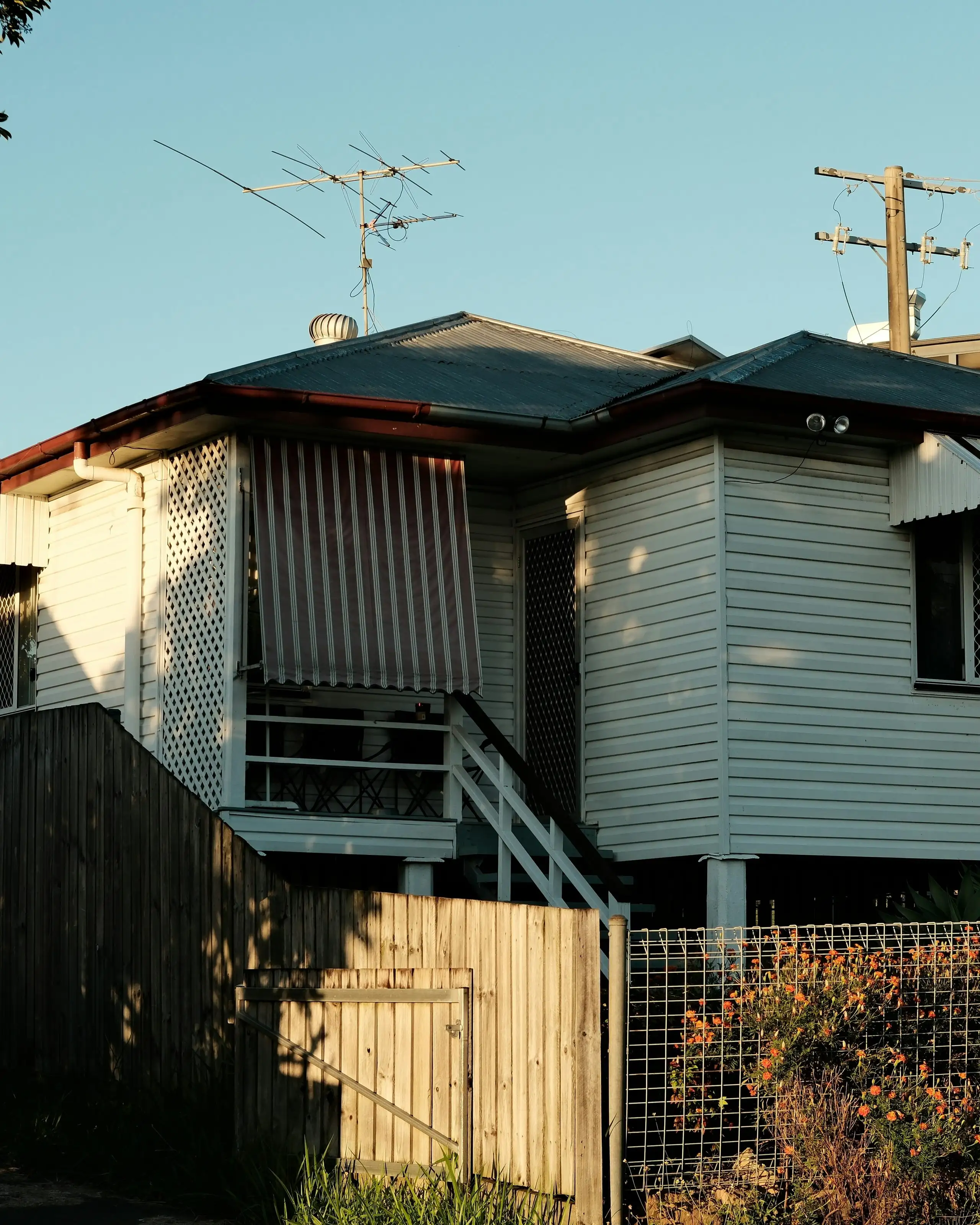
A robust standard is about what the building can absorb. From the footpath, it looks like any other house.
-
Set up for one person
Their room, their routine, their things. Nobody else moves in, and nobody else's crisis becomes theirs.
-
Cameras outside only
Exterior CCTV covers entries and approaches, never private spaces.
Sole occupancy
One person in each home, screened before move-in
SIL at 1:1, or 2:1 where the risk requires it, with no shared ratio and no second resident. That suits supervision orders under the Dangerous Prisoners (Sexual Offenders) Act 2003 (DPSOA), sexual offence and arson histories, and anyone whose risk, order or victim profile rules out sharing.
-
Risk profile review
Risk history, behaviours of concern, known triggers and current supports, assessed by us rather than taken from someone else's file.
-
Order conditions and location
The home's location is checked against the order and the victim profile: exclusion zones, victim proximity, and schools or parks where conditions require it. Any conflict ends that option.
-
Behaviour support plan review
Existing plans and authorised restrictive practices are checked against the building and the roster, so we know before move-in whether the home can deliver the plan.
-
Staged introduction
Meetings with the worker and short visits to the home before any move, at a pace the person sets.
-
Trial period
A defined trial with agreed review points. Everyone is told in advance what happens if it does not work.
-
Exit criteria in writing
Exit and review criteria are agreed and written down before the placement starts, so a breakdown is a planned step.
Our homes are for adults only. No one under 18 is ever placed in a home with adults.
Where
Homes in eight regions
The regions were chosen for where people are released. Elsewhere, in-home and community support comes first and a home is sourced on request.
An FDSQ home, 7 to 14 days
Into a home from a complete referral, once SIL funding is confirmed.
Support now, a home on request
In-home and community support, and a home sourced in response to demand.
In-home and community support in every region. Addresses are given to referrers on request, never published.
Conflict of interest
Housing and support, kept separate
- FDSQ holds the head lease on its homes and also delivers the SIL supports inside them. We disclose that in writing at the point of referral.
- The right to choose a support provider does not depend on where a person lives. The right to stay in a home does not depend on who provides the supports.
- The person and their decision makers are told both in writing at the start of a placement, and told exactly how to change either one.
- Tenancy documents and service agreements are kept separate. Exit criteria and dispute pathways are agreed before move-in.